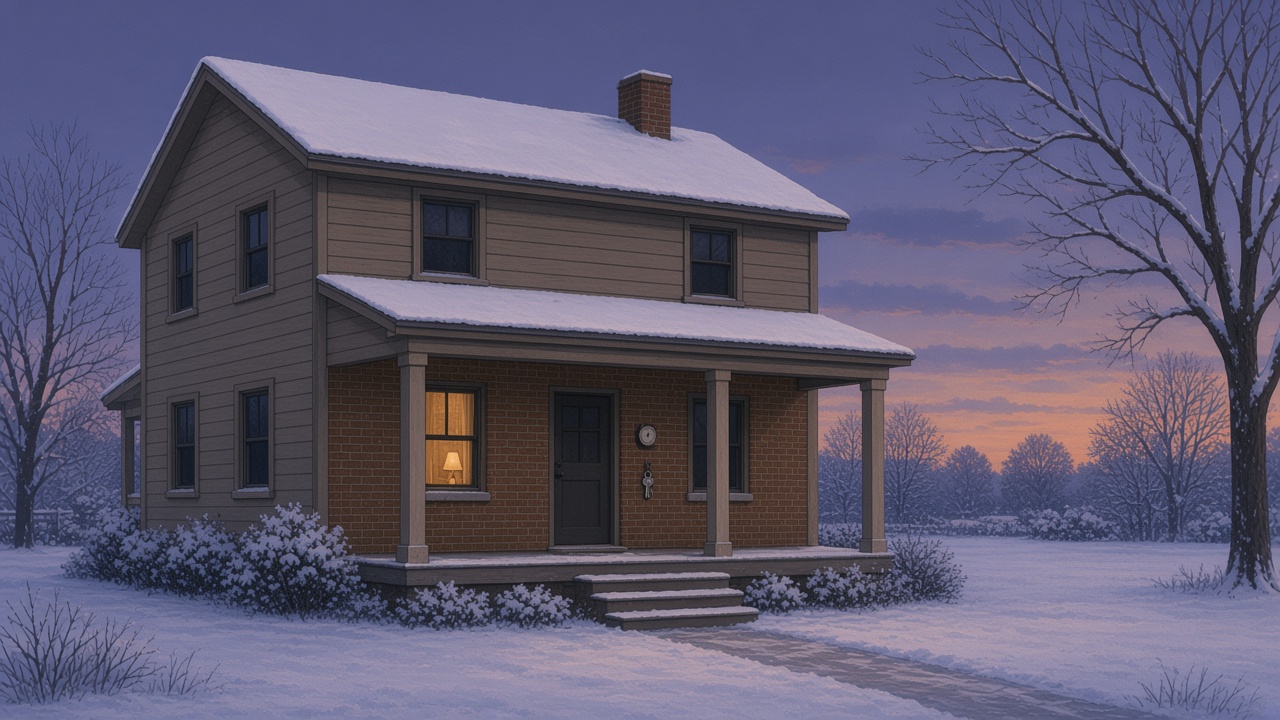
What Should I Do With a Vacant House in Louisville Over the Winter?
Keep the heat on low, either leave the water on with the heat or shut it off and drain it, and have someone walk through regularly. A Louisville buyer on why empty houses get hurt in winter, heat versus winterizing, telling your insurer, and inherited houses.
Keep the heat on at a low setting. Then make one decision about the water: either leave it on with the heat running, or shut it off at the main and drain the lines. And have somebody walk through the house on a regular schedule. A vacant house in a Louisville winter fails quietly, and those three steps cost far less than a frozen pipe.
We carry vacant houses every winter, between buying and rehab or between tenants. This fall one of ours still had the gas off when the first cold snap was on the way, so it went to the top of the list.
Water expands when it freezes. A pipe on an outside wall, in a crawl space, or under a sink can split, and when it thaws the water just runs.
In a house somebody lives in, they hear it or see it that morning. In an empty house, nobody notices until the next visit. That's what turns a small leak into wet floors, wet drywall, and a basement full of water. The Insurance Information Institute makes the same point: damage in vacant houses tends to be worse because nobody is around to report it or stop it.
Winter also hits the outside. Clogged gutters back up, ice builds at the roof edge, and a small leak nobody sees can soak an attic for weeks. Clean the gutters before the cold sets in and look up at the roof on every visit.
It comes down to how long the house will sit and what happens to it next.
Keep the heat on if you'll be in and out of the house, if it's for sale and buyers will tour it, or if it's only sitting a few weeks. The American Red Cross says that if you're away in cold weather, leave the heat on and set it no lower than 55 degrees. Open the cabinet doors under the kitchen and bathroom sinks so warm air reaches the pipes, and keep the garage door shut if there are water lines in the garage. Louisville Water adds a few more: disconnect the garden hoses, turn off the outside faucets, and cover the crawl space vents.
Winterize if the house will sit empty for a long stretch and nobody needs running water there. Travelers' guidance for an empty home is to shut off the water supply, open the faucets to drain the lines, and flush the toilets. It also says to use only non-toxic antifreeze rated for plumbing if you treat the toilets and drains. A licensed plumber can do the whole job and blow the lines out with air. Travelers also flags two exceptions: talk to a heating pro first if the house has an older steam heating system, and don't shut off the water to a fire sprinkler system.
Plenty of owners do both. Heat on low and water off is how I'd leave most of ours.
Whichever way you go, find the main water shutoff and tag it. Louisville Water says it's usually near the water heater, in the basement, or in a utility closet. If a pipe does go, whoever is there can stop it in a minute.
Call your agent before the house sits empty, not after something goes wrong. State Farm warns that if a home is empty for a month or more, a homeowners policy may not cover losses that happen while it's vacant. Every policy is different, so ask your agent what yours says about vacancy and whether you need different coverage.
While you're at it, tell them who's checking the house and how often. Write down the date of every visit. If you ever do need to file a claim, a record of who was there and when helps.
Somebody has to, and it goes better when the family names one person. That person keeps the utilities on, gets the mail, carries a key, and either walks the house or pays someone who will.
Who has the legal authority and who pays the bills while the estate is open depends on the estate and the family. That's a question for the probate attorney or the executor, and it's worth asking early. Agreeing on the house sitter is a family decision, and it doesn't need to wait on court.
I wrote about selling an inherited house when several family members are on the deed.
Some people would rather not spend the winter driving over to check on a house. If that's you, selling it as-is is one option, and so is listing it. A cash buyer takes it as it sits, and a listing agent can tell you what it might bring on the market. I'll tell you which one I think fits your house, and if it's a listing, I'm happy to connect you with someone I'd recommend, whether you sell to us or not. More on selling a house as-is in Kentucky.
What temperature should I keep a vacant house at in winter? The American Red Cross says no lower than 55 degrees if you're away in cold weather. Ask your heating contractor if your system is unusual.
Should I shut off the water in a vacant house? If it'll sit empty a long time, shutting off the main and draining the lines is the safer call. Leave the water on to a fire sprinkler system and get advice first on an older steam heating system.
How often should someone check on a vacant house? Often enough that a leak gets caught in days, not weeks, and more often during a hard freeze. Your insurer may have its own expectation, so ask.
Does homeowners insurance cover a vacant house? It depends on the policy. Some limit coverage once a home has been empty for a while. Call your agent before it sits.
Can I sell a vacant house in the winter? Yes. Houses sell in Louisville all winter, as-is or listed.
If you've got a house sitting empty this winter, who's the one checking on it?
- American Red Cross, Preventing and Thawing Frozen Pipes: https://www.redcross.org/get-help/how-to-prepare-for-emergencies/types-of-emergencies/winter-storm/frozen-pipes.html
- Louisville Water Company, Winter on the Horizon: Protect Your Pipes: https://louisvillewater.com/news/winter-on-the-horizon-protect-your-pipes/
- Travelers, How to Winterize Your Home While You're Away: https://www.travelers.com/resources/home/safety/snowbirds-winterize-your-vacant-home
- State Farm, Ways to Help Protect Your Vacant House After Moving: https://www.statefarm.com/simple-insights/residence/ways-to-protect-your-vacant-house-after-moving
- Insurance Information Institute, A Vacant Home Still Needs Insurance: https://www.iii.org/printpdf/press-release/a-vacant-home-still-needs-insurance-dont-be-caught-without-coverage-111909
Share this post
Related Posts

Can I Sell an Inherited House in Louisville If Several Family Members Are on the Deed?
Yes, you can sell an inherited house with several family members on the deed. Everyone on the deed signs, but nobody has to be in the same room. A Louisville buyer walks through checking the deed, picking a point person, signing from out of town, handling a holdout, the contents, and splitting the money.
What Can I Do If a Cash Offer on My House Is Lower Than I Expected?
A cash offer lower than you expected isn't the end of the conversation. A Louisville cash buyer explains where the gap comes from (repairs, holding and selling costs, risk, comps), how to check the math, how to counter, and when a lower cash offer still makes sense.

What Happens After the Buyer's Inspection When You Sell a House in Louisville?
After the buyer's inspection, the buyer sends a list of what they want fixed or credited. You can agree, say no, or offer something else. A Louisville cash buyer walks through the report, the renegotiation, walk-away risk, and how a cash sale changes that stretch.